
How Smart B2B Marketers Use Personalization, Data, and Multi-Channel Strategies to Turn Clients Into Long-Term Partners
Building strong B2B relationships is no longer just a competitive advantage — it’s a business necessity. In a market where buyers are more informed, sales cycles are longer, and decision-making involves multiple stakeholders, the companies that win are those that prioritize relationships over transactions.
This guide breaks down the most effective B2B marketing strategies for building trust, engaging high-value clients, and creating partnerships that drive sustainable, long-term growth.
What Makes B2B Relationships are Different — and Why Marketing Matters More Than Ever
B2B interactions are fundamentally different from consumer marketing. They involve longer sales cycles, multiple decision-makers, and significantly higher stakes. A single client relationship can represent years of recurring revenue, referrals, and co-growth opportunities.
That’s why marketing in a B2B context must go beyond brand awareness and lead generation. It must actively nurture trust, demonstrate expertise, and deliver consistent value at every stage of the client lifecycle.
The four cornerstones of any strong B2B relationship are:
-
- Trust and Reliability — consistently delivering on commitments and maintaining transparency
-
- Mutual Goals — aligning your objectives with those of your partners for shared success
-
- Open Communication — maintaining regular, honest, and clear dialogue
-
- Flexible Solutions — adapting your offerings to the evolving needs of each client
When marketing strategy is built around these pillars, it creates a foundation for partnerships that outlast market shifts and competitive pressures.
The Shift From Transactional to Relationship-First B2B Marketing
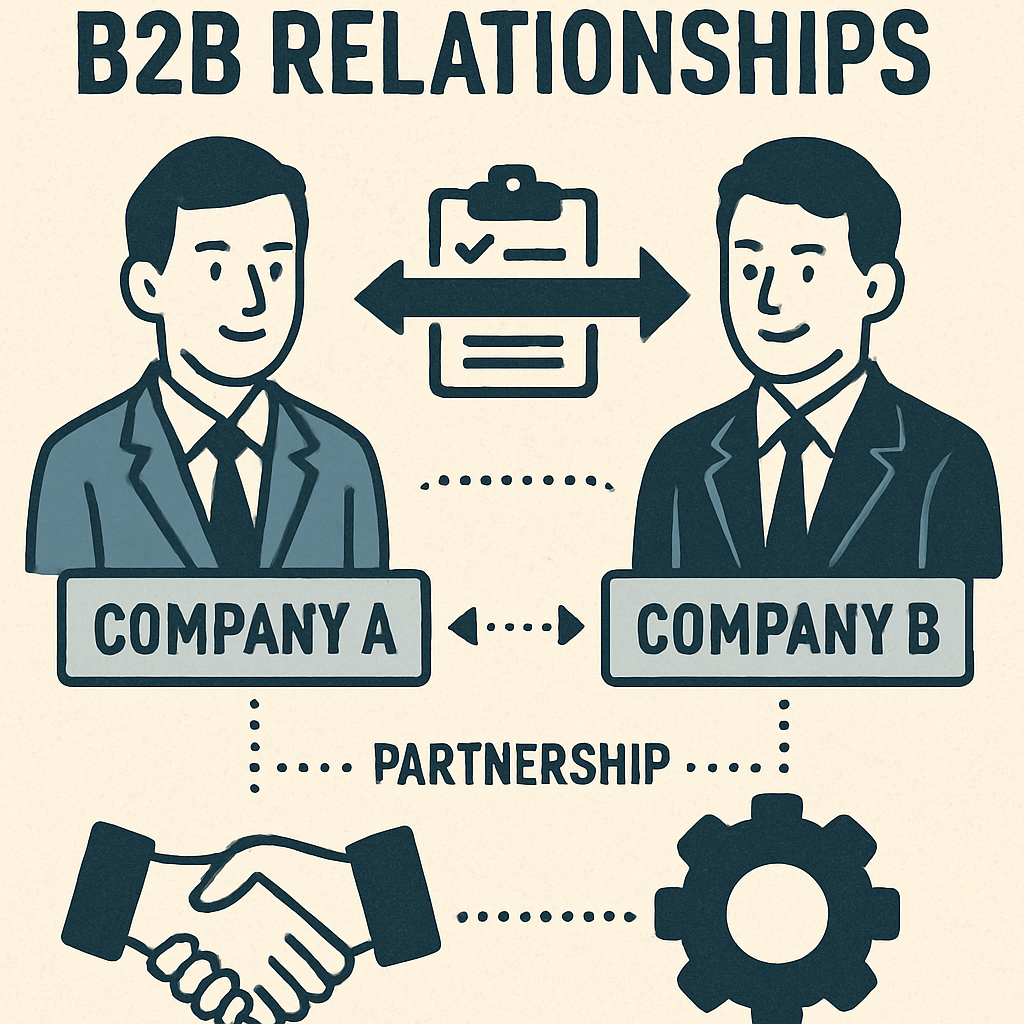
The most significant evolution in modern B2B marketing is the move away from purely sales-driven campaigns toward a relationship-first model. Businesses are recognizing that long-term partnerships consistently outperform one-time transactions — in both revenue value and client loyalty.
This shift requires a change in mindset at the organizational level. Rather than asking “How do we close this deal?”, the better question is “How do we become indispensable to this client?”
Technology plays a central role here. CRM platforms, marketing automation tools, and AI-powered analytics have made it possible to personalize interactions at scale — turning broad outreach into genuinely relevant, timely communication that clients actually value.
Personalization and Segmentation: The Engine of B2B Customer Engagement
Personalization is no longer optional in B2B marketing — it is the baseline expectation. Decision-makers are flooded with generic outreach daily. What cuts through is communication that speaks directly to their specific industry, challenges, and goals.
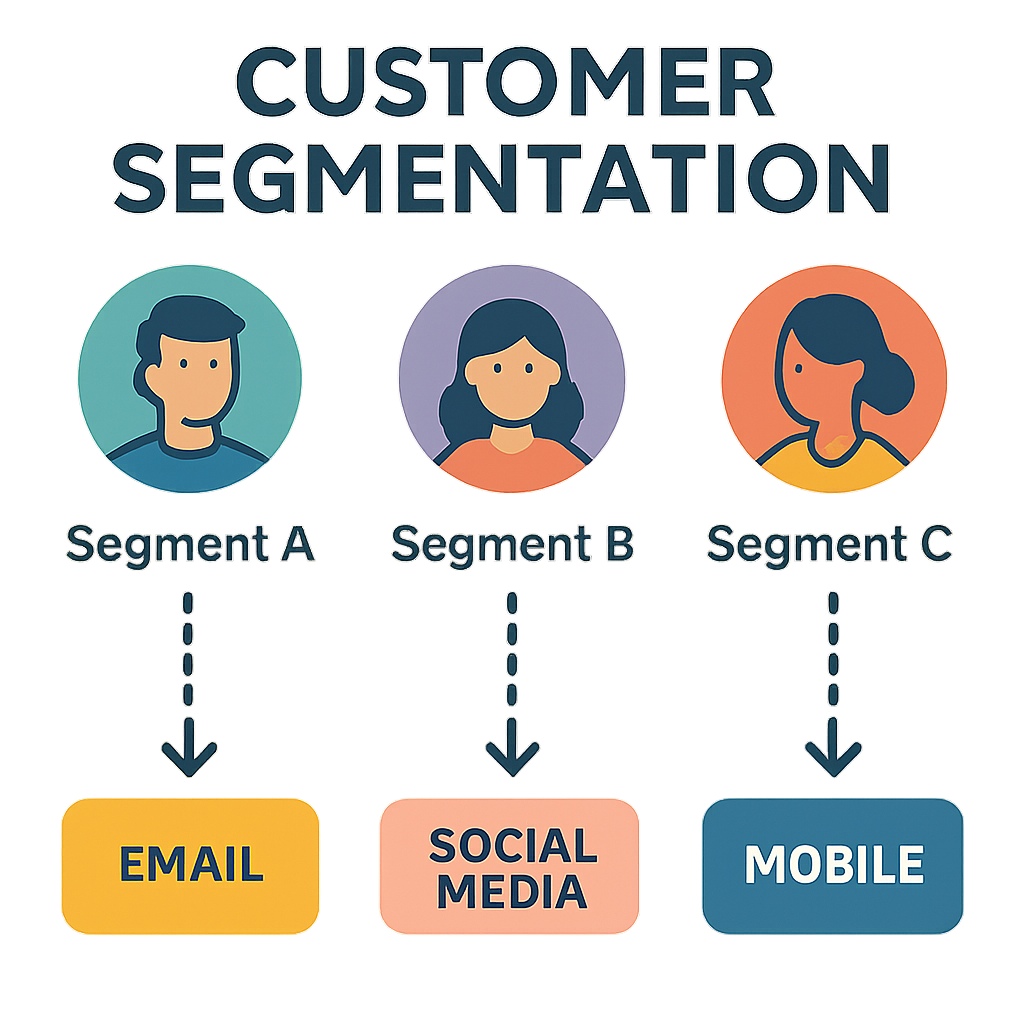
Effective segmentation is what makes personalization scalable. By categorizing your audience into meaningful groups — by industry, company size, buying stage, or pain point — you can deliver tailored experiences that feel individual even at volume.
High-impact personalization tactics include:
-
- Customized email sequences that address specific business needs and buying signals
-
- Industry-aligned content that speaks to the unique challenges of each client segment
-
- Personalized product or solution recommendations based on prior interactions and usage data
Implementing this level of personalization requires robust data collection and ongoing analysis. But the return is significant: deeper engagement, stronger loyalty, and measurably higher conversion rates.
Leveraging Data and Analytics for Smarter B2B Decisions
Data is one of the most powerful tools available to B2B marketers today. When used effectively, it transforms guesswork into strategy — providing clear insight into client behavior, campaign performance, and emerging market trends.
Modern analytics platforms allow marketers to:
-
- Identify trends in customer behavior before they become obvious
-
- Measure campaign effectiveness in real time and reallocate resources accordingly
-
- Optimize ROI by focusing spend on the channels and tactics that actually convert
More importantly, data-driven marketing enables proactive strategy. Instead of reacting to what clients ask for, businesses can anticipate needs and position solutions before a competitor does. This creates a significant trust advantage — clients feel understood rather than sold to.
Content Marketing: Building Authority and Trust With B2B Audiences
In B2B markets, buyers are researchers. Before they ever contact your sales team, they’ve read your content, evaluated your expertise, and formed an opinion about your brand. This makes content marketing one of the highest-leverage investments a B2B company can make.
A strong content strategy positions your brand as a thought leader — a trusted resource that clients return to when they need guidance, not just a vendor they call when ready to purchase.
The content formats that consistently drive B2B results include:
-
- In-depth blog posts and articles that address real industry challenges (like this one)
-
- Whitepapers and case studies that demonstrate proven results and expertise
-
- Webinars and podcasts that build community and ongoing engagement
Quality content also fuels every other marketing channel. It improves organic search rankings, strengthens social media presence, and gives your sales team credible, valuable assets to share during the buying process.
Multi-Channel Digital Strategies: Meeting B2B Buyers Where They Are
Today’s B2B buyers don’t follow a linear path. They research across search engines, LinkedIn, industry publications, email, and peer communities — often simultaneously. A multi-channel strategy ensures your brand is visible and consistent wherever those conversations are happening.
An effective B2B multi-channel strategy typically includes:
-
- Email marketing for lead nurturing, onboarding, and ongoing client communication
-
- Social media (especially LinkedIn) for real-time engagement, thought leadership, and brand visibility
-
- SEO to capture demand at the research stage and drive qualified inbound traffic
The key is not just being present on multiple channels, but delivering a consistent, cohesive message across all of them. Fragmented or inconsistent communication erodes trust. A unified brand voice builds it.
Emerging Technologies Reshaping B2B Marketing
The B2B marketing landscape is being fundamentally reshaped by technology. Companies that adopt these tools early gain a measurable competitive edge in both efficiency and client experience.
Artificial Intelligence (AI) and Machine Learning are enabling marketers to analyze vast datasets, automate repetitive tasks, and deliver hyper-personalized experiences at scale. From predictive lead scoring to dynamic content generation, AI is no longer a future consideration — it’s a present-day necessity.
Virtual Reality (VR) and Augmented Reality (AR) are opening new doors for immersive product demonstrations and interactive presentations, particularly valuable in complex B2B sales environments where visualizing a solution matters.
Blockchain is emerging as a tool for secure, transparent transactions and verifiable supply chain data — building a new layer of operational trust between B2B partners.
Keeping pace with these innovations requires a culture of continuous learning and a willingness to test, adapt, and iterate.
Account-Based Marketing (ABM): Targeting Your Highest-Value Clients
Account-Based Marketing (ABM) is the strategic approach of concentrating marketing and sales resources on a defined set of high-value target accounts. Rather than casting a wide net, ABM goes deep — delivering highly personalized campaigns designed specifically around the needs, goals, and pain points of individual companies.
The core elements of a successful ABM strategy are:
-
- Sales and marketing alignment — both teams working from the same account intelligence and shared goals
-
- Personalized content creation — messaging and materials crafted specifically for each target account
-
- Precision targeting — using data to identify the right contacts within each account and engage them at the right time
ABM consistently delivers higher conversion rates and stronger client retention than broad-based marketing, making it one of the most ROI-positive strategies available to B2B companies with complex, high-value client relationships.
Building Long-Term B2B Relationships Through Communication and Transparency
The difference between a vendor and a trusted partner almost always comes down to three things: communication, transparency, and reliability.
Long-term B2B relationships require ongoing investment — not just during the sales process, but throughout the entire client lifecycle. Regular check-ins, proactive updates, and honest communication during challenges all signal that you value the relationship beyond the contract.
Practical steps for maintaining strong long-term relationships include:
-
- Scheduling regular client meetings to review performance, discuss goals, and surface emerging needs
-
- Maintaining open and honest communication — especially when things don’t go as planned
-
- Delivering consistent, reliable service that reinforces trust over time
Clients who trust you become advocates. They renew contracts, expand engagements, and refer others — creating compounding growth that no single marketing campaign can replicate.
Measuring What Matters: KPIs and ROI in B2B Relationship Marketing
Strong relationships need to be measured, not just felt. The right KPIs give marketing and leadership teams a clear, data-backed view of relationship health and business impact.
The most important metrics for B2B relationship marketing include:
-
- Customer Retention Rate — the percentage of clients who continue doing business with you over time
-
- Customer Lifetime Value (CLV) — the total revenue generated by a client over the full duration of the relationship
-
- Conversion Rates — the rate at which leads and prospects move through your pipeline to closed partnerships
Tracking these metrics consistently allows you to identify what’s working, where relationships are at risk, and where investment in marketing or service delivery will have the greatest impact. ROI measurement also ensures your marketing strategy remains cost-effective and aligned with business objectives.
Overcoming Common B2B Marketing Challenges
Even the best-planned B2B marketing strategies face real-world obstacles. The most common challenges — generating quality leads, adapting to technology changes, and aligning sales and marketing teams — all have strategic solutions.
The key is to approach these challenges proactively rather than reactively:
-
- Regularly audit and update your marketing technology stack to ensure you’re using the most effective tools available
-
- Invest in ongoing training and skill development for your marketing team so they can leverage new capabilities as they emerge
-
- Foster tight collaboration between sales and marketing — misalignment between these two functions is one of the leading causes of pipeline inefficiency and missed revenue
Flexibility and a commitment to continuous improvement are what separate B2B companies that grow from those that plateau.
Future Trends: What B2B Relationship Marketing Looks Like Next
The future of B2B marketing belongs to companies that are both technologically forward and deeply human in their client approach. AI will continue to unlock new levels of personalization and efficiency. Big data will make marketing more predictive than reactive. And clients will continue to raise their expectations for relevant, timely, and genuinely valuable engagement.
To prepare, B2B marketing leaders should focus on:
-
- Investing strategically in emerging technologies — particularly AI, automation, and data analytics
-
- Building a culture of continuous innovation where experimentation is encouraged and learning is embedded in everyday operations
-
- Developing agile marketing teams that can pivot strategy quickly as market conditions and client needs evolve
The companies that thrive will be those that see marketing not as a department, but as the engine that builds, deepens, and sustains every valuable client relationship in the business.
Frequently Asked Questions About B2B Relationship Marketing
Q: What is B2B relationship marketing? B2B relationship marketing is a long-term strategy focused on building trust, loyalty, and mutual value between businesses rather than pursuing one-time transactions. It uses personalized communication, data-driven insights, and consistent engagement to turn clients into lasting partners.
Q: Why is relationship marketing important in B2B? B2B buying cycles are long and involve multiple decision-makers. Relationship marketing keeps your brand top-of-mind throughout that process, reduces churn, increases customer lifetime value, and generates referrals — all of which deliver better ROI than short-term acquisition campaigns alone.
Q: What is Account-Based Marketing (ABM) and how does it help B2B relationships? ABM is a highly targeted strategy where marketing and sales teams collaborate to create personalized campaigns for specific high-value accounts. Instead of broad outreach, ABM focuses resources on the clients most likely to deliver the greatest business impact — resulting in stronger relationships, faster deal cycles, and higher retention rates.
Q: How does content marketing support B2B relationship building? Content marketing builds trust by demonstrating expertise before a prospect ever speaks to your sales team. Whitepapers, blog posts, webinars, and case studies position your brand as a thought leader — giving potential and existing clients a reason to keep coming back to you for guidance, not just products or services.
Q: How do you measure the success of B2B relationship marketing? The most reliable KPIs for B2B relationship marketing include Customer Retention Rate, Customer Lifetime Value (CLV), Net Promoter Score (NPS), conversion rates through the sales funnel, and engagement metrics across your content and email channels. These metrics together give you a full picture of relationship health and marketing ROI.
Q: What role does personalization play in B2B marketing? Personalization is critical in B2B because decision-makers expect communication that speaks directly to their industry, company size, and specific challenges. Personalized outreach — powered by data and segmentation — consistently outperforms generic campaigns in both open rates and conversion, and signals to clients that you genuinely understand their business.
Q: How is AI changing B2B relationship marketing? AI enables B2B marketers to analyze large datasets, predict buying behavior, automate personalized communication, and optimize campaigns in real time. Rather than replacing the human element of relationship marketing, AI enhances it — freeing up teams to focus on high-value strategic conversations while automation handles scale and timing.
Conclusion: Strong B2B Relationships Are Your Most Valuable Growth Asset
Effective B2B marketing is ultimately about one thing: building relationships that create real value for both parties. That requires a combination of strategic personalization, data-driven decision-making, authentic content, smart technology, and — above all — a genuine commitment to your clients’ success.
The businesses that get this right don’t just win clients. They build partners. And in B2B markets, those partnerships are the most durable and valuable growth asset any company can have.